
The engine
Six complementary moving parts, so households do not go back to charcoal.
This is what we mean by the engine: a system that converts households to clean cooking and keeps them there.
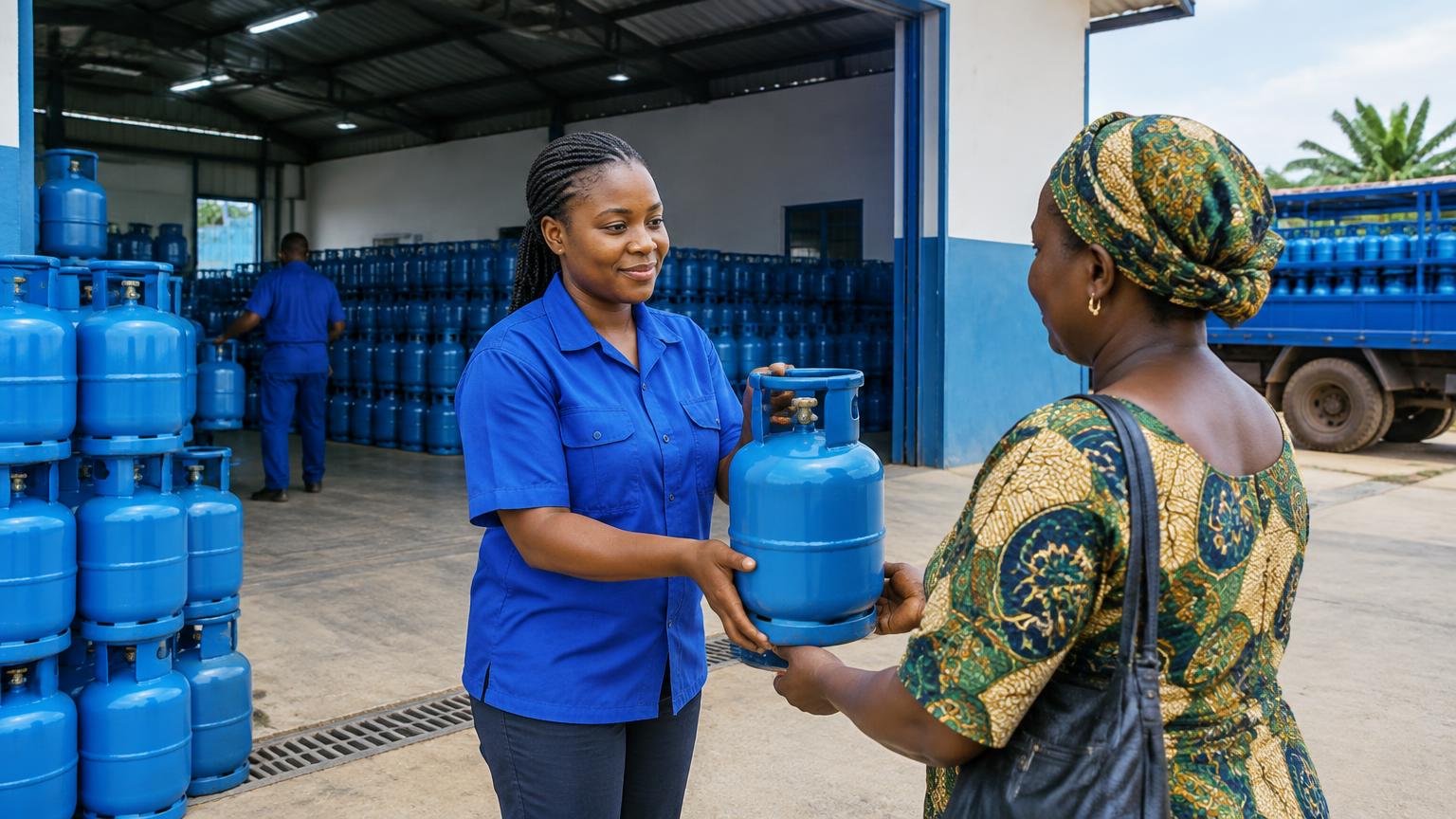
Supply infrastructure
We are building the storage, filling and cylinder capacity the last mile runs on.
Building the second-mile and last-mile infrastructure across the six geo-political zones of Nigeria.
Last-mile network
We convert the charcoal seller, because she already has the trust.
GASpreneur retailers operate at ward level. Each one is certified, numbered, and accountable for the households they adopt. At least half the network is female-owned by rule, not aspiration.
Affordability
The barrier is not desire. It is a lump sum that is hard to assemble in one go.
Household income runs ₦120,000 to ₦250,000 (US$86 to US$179) a month. A kit priced at ₦85,000 (US$61) asks for between a third and three quarters of that in one payment. Instalments and charcoal parity turn it into a monthly bill the household already pays.
Demand generation
Trust arrives before the agent knocks.
Clean Cooking Radio and the Clean Cooking Podcast are owned media, not bought. They warm a ward before a retailer works it, at a fraction of paid acquisition cost.
Verified household data
Households are identified, located, paid for and adopted before a cylinder moves.
KYC, GPS tag, payment confirmation and named retailer adoption. Four checks before a cylinder is allocated, then continuous refill monitoring after it. Most of the Nigerian LPG chain does not keep a record at this level.
Carbon
Carbon finance reaches households through infrastructure. This is the infrastructure.
We run carbon programmes in territories of our own, and we host other developers in territories of theirs. The baseline method, the verification and the reporting are the same either way, and a territory belongs to one programme, so hosting a developer is not competing with one.
US dollar figures are indicative, converted at ₦1,400 to the dollar.
The sequence
How a cylinder reaches a household.
Throughput arrangements at coastal terminals.
Storage and filling close to the markets we serve.
Cylinders held within walking distance of the household.
A certified GASpreneur who knows the street and the customer.
Exchange, not wait. The cylinder swaps in minutes.